I have to ask.. do we really NEED all these imports? Is more stuff really the answer?
The collapse of American power - Would you want to hold the debt of a country whose imports exceed its industrial production?
As of March 17, 2008, one Swiss franc is worth more than $1 dollar. In 1970, the exchange rate was 4.2 Swiss francs to the dollar. In 1970, $1 purchased 360 Japanese yen. Today $1 dollar purchases less than 100 yen.
If you were a creditor, would you want to hold debt in a currency that has such a poor record against the currency of a small island country that was nuked and defeated in WW II, or against a small landlocked European country that clings to its independence and is not a member of the EU?
Would you want to hold the debt of a country whose imports exceed its industrial production? According to the latest US statistics as reported in the February 28 issue of Manufacturing and Technology News, in 2007 imports were 14 percent of US GDP and US manufacturing comprised 12 percent of US GDP. A country whose imports exceed its industrial production cannot close its trade deficit by exporting more.
The dollar has even collapsed in value against the euro, the currency of a make-believe country that does not exist: the European Union. France, Germany, Italy, England and the other members of the EU still exist as sovereign nations. England even retains its own currency. Yet the euro hits new highs daily against the dollar.
Noam Chomsky recently wrote that America thinks that it owns the world. That is definitely the view of the neoconized Bush administration. But the fact of the matter is that the US owes the world. The US “superpower” cannot even finance its own domestic operations, much less its gratuitous wars except via the kindness of foreigners to lend it money that cannot be repaid.
The US will never repay the loans. The American economy has been devastated by offshoring, by foreign competition, and by the importation of foreigners on work visas, while it holds to a free trade ideology that benefits corporate fat cats and shareholders at the expense of American labor. The dollar is failing in its role as reserve currency and will soon be abandoned.
When the dollar ceases to be the reserve currency, the US will no longer be able to pay its bills by borrowing more from foreigners.
Saturday, March 29, 2008
Collapsing American Power due to.. too much stuff? hmmm...
Read this today:

Monday, March 24, 2008
More on renting vs. buying
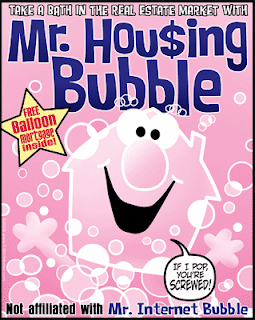
I just found a GREAT website (Patrick.net) that outlines better than anything I've seen in a long time why owning a house is, at best, a questionable idea. It's here. Or...click on the link there at the top right of this page. It's worth spending a hour or two reading as much of it as you can.
Some humor around owning a house:
Lowering interest rates will help the housing and stock market for about as long as peeing your pants will help when you have to go. It will give a warm feeling for a minute.
Everybody hates house-agents because they have everybody at a disadvantage. All other callings have a certain amount of give and take; the house agent simply takes. -- H. G. Wells
Nick Naylor, in Thank You For Smoking: "99% of everything done in the world, good or bad, is done to pay a mortgage. Perhaps the world would be a better place if everyone rented."
Tuesday, February 12, 2008
Renting vs. buying
Yea.. I bought the whole own vs. rent thing, but this post "rent vs. buy myths" makes some very good updated points about the current housing market. I particularly like this one:
I'm thinking renting is the way to go; at least for now.
Downsizing is good. I've been living a far less material life the last 6 months and loving it. I'm currently renting as well (a 600+ SF place 2 blocks off the Pearl Street Mall here in Boulder). I could buy something like this, starting at around half a million dollars. Rent? $500 a month. No HOA fee's. No taxes. No upkeep.The reality is that housing is not an investment. It's shelter. That is all housing has ever been. Self-serving organizations like the National Association of Realtors like to tell people that buying a home is a good way to build long-term wealth, but this statement couldn't be further from the truth.
Although home prices can go up (and down), the rate of appreciation on housing does not surpass inflation levels over the long-term. Between 1890 and 2004, the real return on housing was a pathetic 0.4 percent per year over the last 100 years, according to Robert Shiller, a housing expert and Yale economist.
Real estate investments aren't that much better over the short-term. The gain in new home prices over the last 20 years has been a mere fraction of the Dow's gain. The average person investing in stocks between 1987 and 2007 would have made more money than the average person who bought a new home in 1987.
I'm thinking renting is the way to go; at least for now.
Monday, December 24, 2007
Consumed
Great interview with Benjamin Barber, author of the book "Consumed- How Markets Corrupt Children, Infantilize Adults, and Swallow Citizens Whole".
Here's one quote from Barber:
Here's one quote from Barber:
You know, everyone loves Wal-Mart as a consumer. So do I. Lots of goods, cheap prices. But it has social consequences that, as a consumers, we don't think about. We know it means low wages, it means low wages without pensions. It means wage earners who don't have proper healthcare. But, worse than that, it means the destruction of mom and pop stores. The destruction of retail. The destruction of those very little shops you were talking about that are at the heart of America's villages and towns.Bill Moyers interviews Barber on his Journal show. Watch it here, you might get a different view of how you consume in the future.
Sunday, December 9, 2007
At first, I thought you were weird...
I've heard that from several people lately. They then finish the comment with 'now I think you're onto something'.
I was talking with my Mom tonight and the whole de-materialization thing came up and she took it a step farther. She said "I thought you were nuts". She figured I'd already paid for all that stuff so why get rid of it now? I told her that I had to have a multi-thousands of square foot house to HOLD it all and that made her stop and say "I didn't think of that".
If you have stuff, you have to have a place for all that stuff too. That's a large part of the 'it's owns you' problem. Owning property as an investment is one thing, but owning a home (or homes) that are just stupidly big because you have all this 'stuff' means you have to worry about all the upkeep, the mortgage, the insurance, security, the HOA fees and the difficulty in just moving away if your neighbor is a dickhead (harder if you have to sell it instead of just handing it back to a landlord).
I've also had a few people say there were 'proud' of me. DeAnna, and old friend, told me this over lunch on Friday and my own Dad told me the same thing. When I ask 'are you going to do it?" they back off though. I understand it. It took me a couple of years of thinking about it and about 6 months to actually do (de-materializing is hard work. Seriously).
Now though, it's pretty much done. I have what I need at my fingertips and no more. If I buy something new, I get rid of sometime that it replaces. (bought some new shoes this week, took them home, took a pair of shoes I wear the least and dropped them off in the shoebox the new shoes came in at the Salvation Army).
Some habit's die hard though. My mom asked me if I wanted one of the comforters that she'd 'saved' for me when they took a bunch of my stuff away.
Mom's, it seems, will always want to make sure you're safe and warm.
I was talking with my Mom tonight and the whole de-materialization thing came up and she took it a step farther. She said "I thought you were nuts". She figured I'd already paid for all that stuff so why get rid of it now? I told her that I had to have a multi-thousands of square foot house to HOLD it all and that made her stop and say "I didn't think of that".
If you have stuff, you have to have a place for all that stuff too. That's a large part of the 'it's owns you' problem. Owning property as an investment is one thing, but owning a home (or homes) that are just stupidly big because you have all this 'stuff' means you have to worry about all the upkeep, the mortgage, the insurance, security, the HOA fees and the difficulty in just moving away if your neighbor is a dickhead (harder if you have to sell it instead of just handing it back to a landlord).
I've also had a few people say there were 'proud' of me. DeAnna, and old friend, told me this over lunch on Friday and my own Dad told me the same thing. When I ask 'are you going to do it?" they back off though. I understand it. It took me a couple of years of thinking about it and about 6 months to actually do (de-materializing is hard work. Seriously).
Now though, it's pretty much done. I have what I need at my fingertips and no more. If I buy something new, I get rid of sometime that it replaces. (bought some new shoes this week, took them home, took a pair of shoes I wear the least and dropped them off in the shoebox the new shoes came in at the Salvation Army).
Some habit's die hard though. My mom asked me if I wanted one of the comforters that she'd 'saved' for me when they took a bunch of my stuff away.
Mom's, it seems, will always want to make sure you're safe and warm.
Friday, November 16, 2007
Less stuff seems to equal more time
I wonder how much time we spend actually buying things.
Most people I know think about what they want. They spend time researching it, comparing it to other competitive products, going to look at it (often multiple times if it's something like a car or furniture or technology) and then spending more time trying to get the best price possible.
I would bet each non basic purchase (food, to a degree clothing) takes at least an hour. Maybe a few hours and in the case of big purchases (like a car or house) it can add up to days or more.
And if you're just 'shopping', not 100% sure what you want, hell, that can be 1/2 a day at a mall on a Saturday.
I think this because I find I now have more time on my hands. Most of what I buy now is the basic and those don't really change much for me. Food is pretty routine. Cloths (does it fit? do I have room for it in the closet? is it black?.. I'll take it) are similar. I don't really have the room for more than what's there already so I just walk past all the other stuff.
I used to spend 2 hours whenever I went to Costco for milk and that damn milk always ended up costing me at least several hundred dollars of 'discovered.. gotta have... been looking for that' stuff. After my last 3 visits to Costco where I looked around for an hour decided I didn't need or have a place for that, say, telescope I've been hankering for and will use maybe twice in a year, and still walked out with just milk (OMG!) I realized I didn't even need that Costco card.
Now I just get 1/2 gallon at the Ideal Market down the street when I'm running low. In and out. Done.
I'm guessing I gain about 6-8 (conservatively) hours a week because of this.
And it's a little odd. I actually find myself, some evenings or weekends, wondering what to do. I think I'll learn how to cartoon, or speak Manderin. :)
Most people I know think about what they want. They spend time researching it, comparing it to other competitive products, going to look at it (often multiple times if it's something like a car or furniture or technology) and then spending more time trying to get the best price possible.
I would bet each non basic purchase (food, to a degree clothing) takes at least an hour. Maybe a few hours and in the case of big purchases (like a car or house) it can add up to days or more.
And if you're just 'shopping', not 100% sure what you want, hell, that can be 1/2 a day at a mall on a Saturday.
I think this because I find I now have more time on my hands. Most of what I buy now is the basic and those don't really change much for me. Food is pretty routine. Cloths (does it fit? do I have room for it in the closet? is it black?.. I'll take it) are similar. I don't really have the room for more than what's there already so I just walk past all the other stuff.
I used to spend 2 hours whenever I went to Costco for milk and that damn milk always ended up costing me at least several hundred dollars of 'discovered.. gotta have... been looking for that' stuff. After my last 3 visits to Costco where I looked around for an hour decided I didn't need or have a place for that, say, telescope I've been hankering for and will use maybe twice in a year, and still walked out with just milk (OMG!) I realized I didn't even need that Costco card.
Now I just get 1/2 gallon at the Ideal Market down the street when I'm running low. In and out. Done.
I'm guessing I gain about 6-8 (conservatively) hours a week because of this.
And it's a little odd. I actually find myself, some evenings or weekends, wondering what to do. I think I'll learn how to cartoon, or speak Manderin. :)
Wednesday, October 10, 2007
A few weeks in...
There's something pure about this process.
At a personal level, I've effectively taken it down to close to almost no material possessions from where I was 60 days ago. I think I can make the list from memory here:
One car
A twin bed
1 sitting chair and 3 stacking chairs.
1 desk and 1 deskchair.
1 desktop computer
1 laptop computer.
3 plants
A Senseo coffee machine
A tea kettle
A blender
Silverware/plates/glasses/cups
Food
Cloths (shoes, shirts, pants, socks, etc.- all fit me, all useful)
Towels/razor/electric toothbruth
I think that's about it. There's other stuff here. (Fridge, W/D) but they're part of the place I'm renting, not mine.
Sparse would be the operative word. Nothing on the walls. Large open swaths of floorspace.
This is very different than how I've tended to live. I'm neat but cluttered by nature. I tended to pile things around me, stick things up on the wall, stuff items in drawers. Stack layers of things on bookshelves and fill rooms with 'stuff' because, hey, I have the room.
No drawers, bookshelves or extra rooms anymore. And the walls: clean, empty and white.
You'd think this would drive me slightly nuts being so different but it's interestingly calming. Peaceful.
I'll start to add things back in as I need them. Little things at first. A few days ago I had to add 'salt and pepper' to the list. I didn't bring any along from the old place. It's an incredibly useful exercise in defining and identifying what's really needed in your day to day life.
I no longer just buy something if I like it (or want it). I really can't. I have no place for it without consciously thinking through what I'll use if for, where it will go when I'm not using it and why, really, I want it.
I'm keeping a list of things I need on the kitchen counter. The first few days it filled up fast (oh yea... dishsoap), but that only lasted a few days. It's been pretty close to empty the last week.
I think I have all the basics nailed down.
Yea. I do.
Now, to slowly, carefully and consciously start to bring back into my life the things I only need to live comfortably and happily, and no more.
I'm smiling as I write all this.
At a personal level, I've effectively taken it down to close to almost no material possessions from where I was 60 days ago. I think I can make the list from memory here:
One car
A twin bed
1 sitting chair and 3 stacking chairs.
1 desk and 1 deskchair.
1 desktop computer
1 laptop computer.
3 plants
A Senseo coffee machine
A tea kettle
A blender
Silverware/plates/glasses/cups
Food
Cloths (shoes, shirts, pants, socks, etc.- all fit me, all useful)
Towels/razor/electric toothbruth
I think that's about it. There's other stuff here. (Fridge, W/D) but they're part of the place I'm renting, not mine.
Sparse would be the operative word. Nothing on the walls. Large open swaths of floorspace.
This is very different than how I've tended to live. I'm neat but cluttered by nature. I tended to pile things around me, stick things up on the wall, stuff items in drawers. Stack layers of things on bookshelves and fill rooms with 'stuff' because, hey, I have the room.
No drawers, bookshelves or extra rooms anymore. And the walls: clean, empty and white.
You'd think this would drive me slightly nuts being so different but it's interestingly calming. Peaceful.
I'll start to add things back in as I need them. Little things at first. A few days ago I had to add 'salt and pepper' to the list. I didn't bring any along from the old place. It's an incredibly useful exercise in defining and identifying what's really needed in your day to day life.
I no longer just buy something if I like it (or want it). I really can't. I have no place for it without consciously thinking through what I'll use if for, where it will go when I'm not using it and why, really, I want it.
I'm keeping a list of things I need on the kitchen counter. The first few days it filled up fast (oh yea... dishsoap), but that only lasted a few days. It's been pretty close to empty the last week.
I think I have all the basics nailed down.
Yea. I do.
Now, to slowly, carefully and consciously start to bring back into my life the things I only need to live comfortably and happily, and no more.
I'm smiling as I write all this.
Subscribe to:
Posts (Atom)